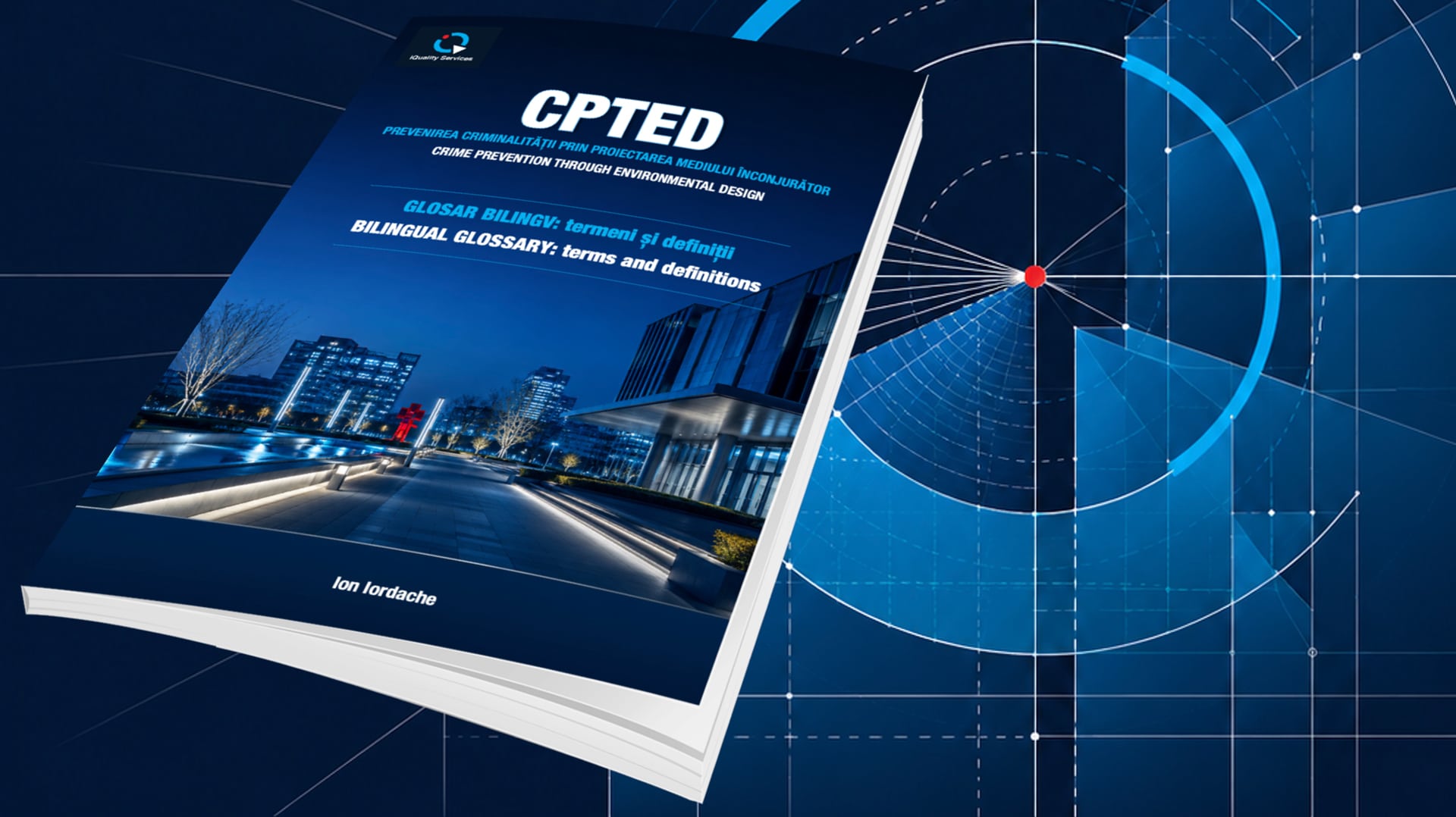
Bilingual CPTED Glossary: The Shared Language of the Multidisciplinary Team
Crime Prevention Through Environmental Design brings together professionals from many different fields. Yet two specialists can use the same CPTED term and end up designing two completely different solutions. Not because either one is wrong, but because they understand the terminology differently. In security, a misunderstood term can create confusion long before a project reaches implementation. That challenge is one of the reasons I created this Bilingual CPTED Glossary.
CPTED does not belong to a single profession. It sits at the intersection of urban planning, physical security, environmental psychology, law enforcement, property management, public administration, and several related disciplines. In practice, these professionals often work toward the same objective but use different language to describe it. Without a shared vocabulary, collaboration becomes harder and project outcomes suffer.
The Bilingual CPTED Glossary is designed as a practical working tool rather than an academic dictionary. Each entry appears in both English and Romanian. International standards are published in English, while much of our daily work takes place in Romanian. Bringing both languages together helps bridge that gap.
For every term, you will find the official definition, the clause reference from the originating standard, and a practical application note. The goal is simple: explain what the term means in real projects, not just on paper.
Built on Current CPTED Standards
The glossary is built around SR ISO 22341:2022, the reference standard for CPTED. It also incorporates terminology from ISO 22300:2025 and other related technical standards. Where terminology has evolved, the glossary reflects the most current versions. For example, the term CCTV has largely been replaced by VSS (Video Surveillance System) in accordance with EN IEC 62676-4:2025.
Beyond standards, the glossary also acknowledges the thinkers who shaped the field. It references foundational work from Jane Jacobs and Oscar Newman, as well as more recent research connected to third-generation CPTED.
The content covers principles from all three generations of CPTED and is intended for the entire multidisciplinary team involved in planning, assessment, design, implementation, and training.
If two specialists can start from the same word and arrive at different conclusions, then the first step toward effective collaboration is agreeing on the meaning of that word. This glossary aims to make that possible.
If you’re interested in CPTED, physical security, and the ideas shaping safer communities, you can also connect with me on LinkedIn for additional insights and resources.
The Bilingual CPTED Glossary is available for 150 RON. To purchase a copy, simply email me. After payment is confirmed, I’ll send you the digital file by email.