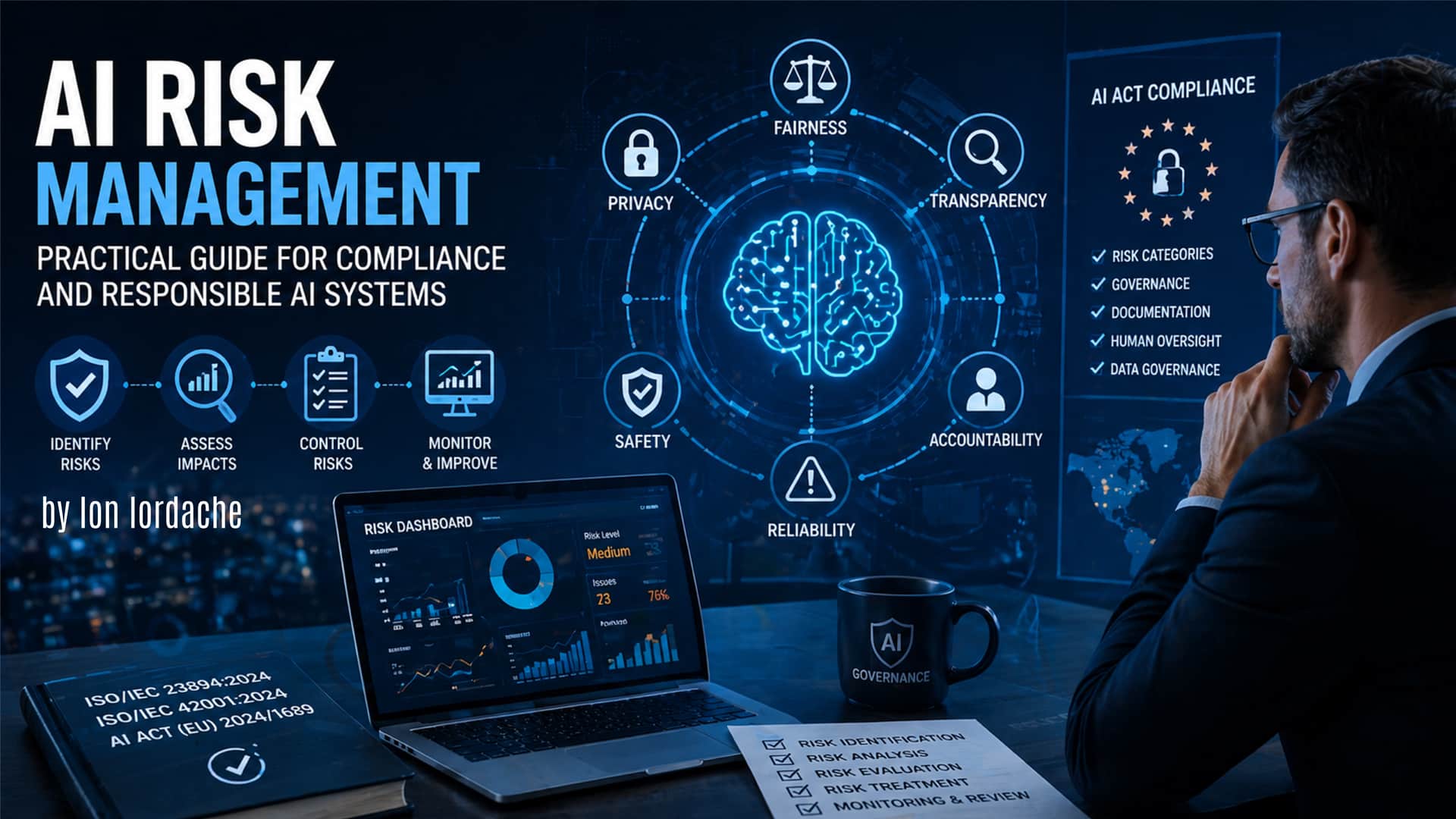
AI risk management is no longer optional. It is becoming a legal and operational requirement for organizations working with artificial intelligence. Three standards, one European regulation, and a clear timeline for 2026 define the context. This guide is written for professionals who govern, implement, and audit AI systems.
Starting August 2, 2026, Regulation (EU) 2024/1689, known as the AI Act, becomes fully applicable. Article 9 requires organizations to implement an AI risk management system for high-risk systems. This system must follow a continuous process across the entire lifecycle. However, the regulation does not explain how to implement it. Because of this, AI risk management becomes a practical challenge. The method comes from SR EN ISO/IEC 23894:2024, the ISO guide for AI risk management. At the same time, this standard does not work alone. It is part of a structured framework that organizations need to understand.
First, SR EN ISO/IEC 22989:2023 defines the common vocabulary. Next, SR EN ISO/IEC 23894:2024 provides the risk management method. Finally, SR ISO/IEC 42001:2024 introduces a certifiable management system. Together, these standards create a complete structure. Above them, the AI Act defines the legal obligations. In practice, this guide is based on real work with executive teams preparing for the AI Act. Today, the question is no longer whether AI risk management is needed. Instead, organizations need to decide which framework to use and how to apply it correctly.
A simple reference to a standard is not enough. You need a clear understanding of how the three standards connect. You also need a practical mapping to the AI Act. Just as important, you need to avoid common implementation mistakes. This guide supports executive leaders, compliance professionals, and consultants. It helps CISO, DPO, risk managers, and decision-makers build a clear path to compliance. Each section follows a practical structure. First, the guide explains the context. Then, it describes the standards and their application. Finally, the annexes provide tools you can use in practice. Standards define requirements. The regulation defines obligations. Still, moving from assessment to certification requires structure, experience, and a realistic timeline.